
What to Expect From HOA Fees in Rancho Penasquitos, CA
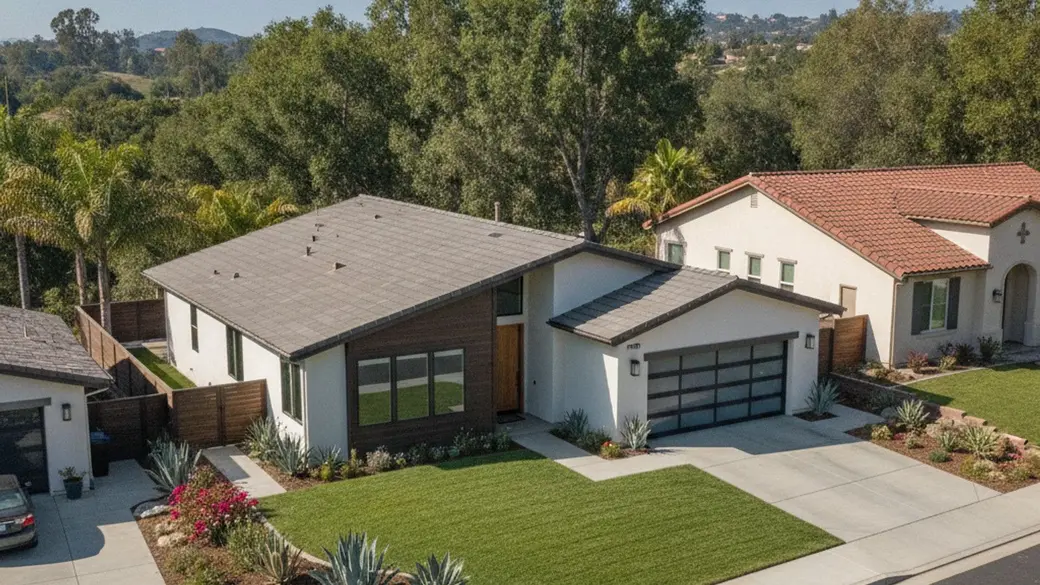
The median sale price for a home in the 92129 ZIP code sits around $1,329,700. Homes spend an average of just 17 days on the Rancho Penasquitos, CA housing market before selling - so when you find something you like, you're moving fast.
That speed means buyers often don't spend enough time thinking about what comes after the purchase price. In Rancho Penasquitos, CA, most properties sit inside a homeowners association, and those monthly dues are a real line item in your housing budget. Get clear on them before you're at the closing table, not after.
How Much Homeowners Pay in Rancho Penasquitos
Monthly HOA dues here typically range from $150 to over $500. Standard single-family neighborhoods tend to land toward the lower end.
If the community you're eyeing has multiple pools, tennis courts, or gated security, plan for the upper end of that range. More amenities means more to maintain, and that cost flows directly to you each month.
Comparing Costs Across the San Diego Metro
San Diego County's median monthly HOA fee hit $367 in 2025, up from $340 in 2024. That gives you a useful benchmark for what's normal versus what's a red flag.
By comparison, the Los Angeles metro averaged $429 per month, the Bay Area ran around $502, and some downtown San Diego condos push well past $1,000 monthly. Rancho Penasquitos lands in a fairly reasonable spot relative to the rest of California.
Factors That Drive Dues Up or Down
The type of home matters a lot here. Condominiums and townhomes almost always carry higher dues because the association is responsible for the building exteriors and roofs - expenses that fall on the individual homeowner in a detached single-family community.
Age-restricted 55+ developments typically fall somewhere in the middle, depending on how extensive their clubhouse and recreational offerings are. It's not a perfect rule, but property type is usually your first clue about where in the $150-to-$500 range you'll land.
Billing Cycles and Payment Schedules
Most associations in Rancho Penasquitos collect dues monthly, which lines up cleanly with your mortgage payment and makes it easier to track your total housing costs. That said, not every community does it this way.
Some single-family neighborhoods bill quarterly or even annually to reduce their administrative overhead. It's worth knowing which you're dealing with before you close - a $1,800 annual bill landing in January hits differently than $150 disappearing from your account each month.
How Communities Collect Dues
Most management companies offer an online portal where you can set up automatic payments. That's the simplest way to avoid late fees and keep the association funded on schedule.
Ask your agent to verify the payment frequency during escrow. It's a small thing to confirm, but it affects your cash flow planning.
What Your Monthly Dues Cover
Every month, the association pools those collected funds to cover neighborhood maintenance and shared liability insurance. What that actually looks like on the ground varies quite a bit from one subdivision to the next.
Part of every payment goes toward day-to-day operations and landscaping. The rest gets set aside in a reserve account for larger, longer-term structural work.
Common Area Maintenance and Services
The basics typically include landscaping in shared parks, upkeep of neighborhood signage, and insurance on common spaces. Many Rancho Penasquitos communities also fold in trash collection or water service as part of the monthly assessment.
Communities with recreational facilities use the funds to clean pools, maintain fitness equipment, and heat spas. Private roads add another expense - street sweeping and asphalt paving fall on the association, not the city.
Reserves and Special Assessments
California state law requires associations to maintain a reserve fund for major future expenses. Think of it as the community's savings account - it's what pays for a new clubhouse roof or a resurfaced tennis court without hitting residents with a sudden demand for cash.
When the reserve falls short, the board can levy a special assessment. That's a separate, mandatory charge billed directly to homeowners, and it's not optional. More on how to spot communities where this is a recurring problem in the next section.
Evaluating the Value of an Association
About 57% of listed homes in San Diego County carry HOA dues. In the 92129 ZIP code specifically, trying to avoid them altogether means cutting your available inventory down significantly.
Statewide, California homeowners pay an average of $300 to $400 per month, with high-cost areas seeing $600 to $700. Rancho Penasquitos tracks closely with both the county and state medians - you're not paying a premium just for the address.
Spotting an Overpriced Association
High dues aren't necessarily a problem. If a community has well-maintained amenities and a healthy reserve fund, $500 a month can be entirely reasonable. The issue is when fees push well above the local $150 to $500 range and the services don't justify it.
During your contingency period, pull the association's financial documents and actually read them. A pattern of frequent special assessments or obvious deferred maintenance tells you the monthly payments aren't being managed well. That's worth knowing before you buy in.
One-Time Association Costs for Buyers
Buying into a governed community in California comes with some upfront costs beyond the purchase price. Transfer fees generally run between $200 and $500 - you'll see them itemized on your final settlement statement.
That money compensates the management company for updating their ownership records. It's routine, but it's real money, and it shows up at closing.
Initiation and Capital Contribution Fees
High-end communities can charge a few thousand dollars to transfer a property, though standard Rancho Penasquitos neighborhoods typically stay within the state norm. The escrow company handles collecting and routing that payment to the association.
Some boards also require a capital contribution or initiation fee from new buyers - a one-time payment that goes directly into the reserve fund. It's the community's way of making sure new owners arrive with some skin in the game for future repairs.
Frequently Asked Questions
What is the average monthly HOA fee for a home in Rancho Penasquitos?
Monthly dues in the 92129 ZIP code generally range from $150 to over $500. Larger complexes with more amenities sit at the higher end, while single-family homes often cost less. This aligns closely with the San Diego County median of $367 per month.
Which neighborhoods in Rancho Penasquitos do not have any HOA fees?
Finding a home without these fees is possible but limits your options, as about 57% of San Diego County listings include them. Older single-family tracts built before the rise of planned communities are your best bet for avoiding dues entirely.
What do HOA dues typically cover in Rancho Penasquitos condo and townhome communities?
Condo and townhome dues pay for exterior building maintenance, roof repairs, and master insurance policies. They also fund shared amenities like pools, landscaping, and sometimes utilities like water and trash collection.
Are Rancho Penasquitos homeowners associations allowed to charge unexpected special assessments?
Yes. If the community's reserve fund cannot cover a major repair or emergency expense, the board can levy a special assessment. Homeowners are required to pay this additional charge.
At what point in the escrow process will I receive the HOA rules and financial documents for a Rancho Penasquitos property?
Sellers provide the association's governing documents and financial statements during the contingency period of the escrow process. Buyers then have time to review the community's reserve funds and rules before moving forward.
Is a Mello-Roos tax the same thing as an HOA fee in the Rancho Penasquitos area?
No. A Mello-Roos tax is a special property tax assessment used to fund local public infrastructure like schools and roads, whereas association fees go to a private management board to maintain neighborhood amenities. Homeowners can be subject to both depending on the specific subdivision.
Categories
Recent Posts

GET MORE INFORMATION