
Estimating Buyer Closing Costs in Rancho Penasquitos, CA (2026)
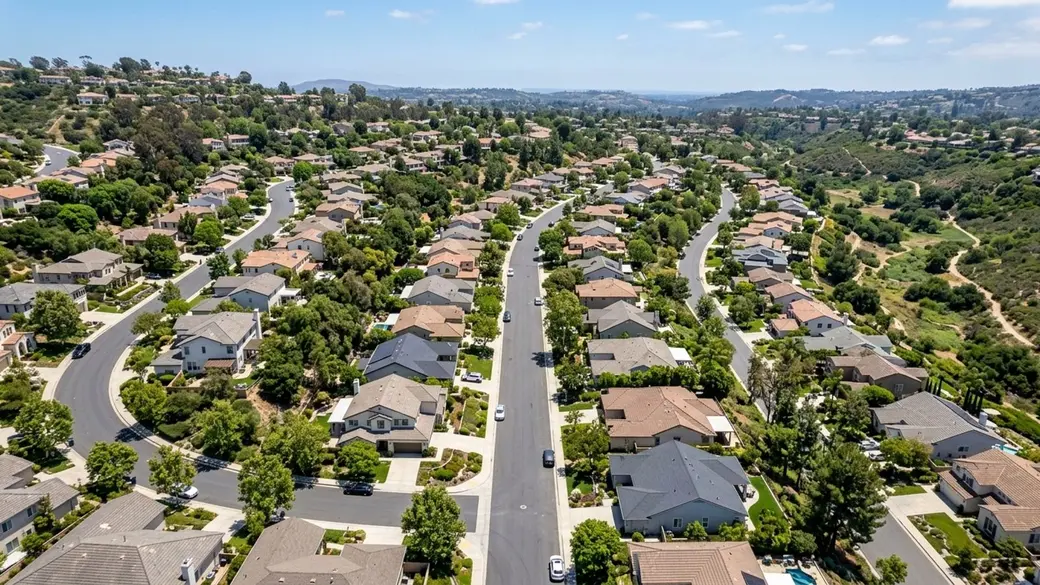
The median sale price for a home in Rancho Penasquitos sits around $1,329,700 as of mid-2026. That price point sets a high bar for any first-time home buyer in Rancho Penasquitos, CA. Most buyers spend months focused on saving for the down payment - and then get surprised by everything else due at the table.
Homes here are moving in roughly 17 days, with nearly 48% going for above asking. In a market that moves that fast, walking into escrow without a clear picture of your full cash requirement is a problem. This guide breaks down what you'll actually owe at closing when you buy in the 92129 zip code.
What Are Closing Costs?
Closing costs cover the administrative, legal, and financial services required to transfer ownership from the seller to you. They're separate from the purchase price and get settled at the end of the escrow process - not rolled into your mortgage, not deferred. You wire them before you get the keys.
Both parties have their own set of expenses. Yours, as the buyer, revolve mostly around securing the mortgage, insuring the property, and funding the initial escrow accounts for taxes and insurance.
Closing Costs vs. the Down Payment
Your down payment is the portion of the purchase price you pay upfront - it reduces the loan amount. Closing costs are what you pay to the third parties who actually execute the transaction: the lender, the title company, the escrow company, and various government agencies.
When your final closing disclosure arrives, the down payment and closing costs are combined into one bottom-line number. That's the wire transfer you'll send to escrow before the deal closes.
Buyer vs. Seller Obligations
Sellers in California typically carry the real estate commissions, which tend to represent the largest line item on their side of the ledger. You, as the buyer, take on the bulk of the loan origination fees and upfront property costs.
How the remaining fees get split follows regional custom in San Diego County - there are established local practices around title insurance and transfer taxes. That said, everything is technically negotiable in the purchase contract.
Average Buyer Closing Costs in California
Buyer closing costs in California generally fall in the 2% to 5% range. Some analyses - including data from Rocket Mortgage and Redfin - put the state average closer to 2.1%, which is meaningfully lower than the 3.3% national average. Other estimates from CalcLogix, using CoreLogic data, suggest a range of 1% to 2.1% when prepaid items like taxes and insurance are excluded.
The exact percentage depends on your loan type, your lender, and the specific property.
Here's the thing about Rancho Penasquitos, though: property values here run well above the state average. Even if your percentage stays on the low end, you're applying that percentage to a much larger number. A 2% closing cost rate on a $1.3 million purchase is a different conversation than 2% on a $600,000 home.
Cost Breakdown by Home Price
Percentages give you a framework, but the dollar figures are what you actually need to budget. On a $100,000 home, typical buyer closing costs land between $2,000 and $5,000. A $300,000 property generally runs $6,000 to $15,000. A $400,000 home, $8,000 to $20,000. At $600,000, you're looking at $12,000 to $30,000.
Given the $1.33 million median price in Rancho Penasquitos, applying the standard 2% to 5% rule puts expected closing costs somewhere between $26,000 and $66,000. Those lower-tier examples aren't your reality here.
Estimating Costs for a Cash Purchase
If you're paying cash, you skip all the lender-related fees - no origination charges, no appraisal, no mortgage points. Your total closing bill drops noticeably.
You still pay for escrow services, recording fees, and property taxes. You'll also have the option to buy an owner's title insurance policy, though in Southern California the seller typically covers that side of the equation.
Breakdown of Buyer Fees in San Diego County
A buyer's closing statement can run to dozens of individual line items. Most fall into three broad categories: lender fees, third-party service charges, and government taxes.
Your Loan Estimate - which your lender is required to provide - will show you exactly where your money is going, itemized for the specific property in the 92129 zip code. Read it carefully. The numbers on that document are what matter.
Loan Fees and Escrow Charges
Lenders charge origination fees to process and underwrite the mortgage. You'll also pay for a property appraisal, which confirms the home's value supports the purchase price your lender is being asked to finance.
Escrow fees go to the neutral third party handling the funds and paperwork. In San Diego County, the buyer and seller typically split the escrow fee - though like most things in the contract, it's negotiable.
Title Insurance and Transfer Taxes
Title insurance protects against ownership defects that might surface from the property's history. In San Diego County, local custom puts the lender's title insurance policy on the buyer's tab, while the seller pays for the buyer's owner's policy.
The documentary transfer tax is set by state law at $0.55 per $500 of property value - that works out to $1.10 per $1,000. Most cities in the county, including San Diego, don't layer a separate city transfer tax on top of that rate.
The county also charges recording fees to make the transaction part of the public record. That typically includes a $75 SB2 fee, capped at $225 per transaction - though owner-occupied residential transfers are often exempt from that one.
How to Manage and Reduce Your Closing Expenses
You have real options here. Government taxes and recording fees are fixed - you're not negotiating those. But lender fees and third-party charges are a different story.
Shopping multiple lenders and comparing Loan Estimates is one of the most effective things you can do. Origination fees and rate options vary more than most buyers expect.
Lender Credits and Shopping Fees
Some lenders will offer credits that offset a portion of your closing costs in exchange for a slightly higher interest rate. You pay less cash upfront but more every month for the life of the loan. Whether that trade makes sense depends on how long you plan to stay in the home.
Your lender will also provide a list of services you're allowed to shop for independently - things like pest inspections or land surveys. Use it. You can often find better pricing on your own than the default vendor your lender suggests.
Asking the Seller to Cover Your Costs
You can ask the seller for concessions - credits applied toward your closing costs - written directly into the purchase offer and negotiated alongside the price.
Whether that request goes anywhere is a function of the market. Homes in 92129 are spending about 17 days on the market, and nearly 48% are selling above list price. Sellers know what they have right now. Asking for concessions in this environment isn't impossible, but you should go in with realistic expectations.
Frequently Asked Questions
How much should I budget for buyer closing costs on a typical home in Rancho Penasquitos, CA?
You should plan for roughly 2% to 5% of the purchase price. With the median sale price in Rancho Penasquitos around $1,329,700, that means budgeting anywhere from $26,000 to over $66,000 for a financed purchase.
Is it realistic to ask the seller to cover my closing costs in the current Rancho Penasquitos real estate market?
It depends on the specific property, but sellers rarely need to offer them right now. Homes in the 92129 zip code are spending only about 17 days on the market, and nearly 48% are selling above list price - which makes negotiating concessions genuinely difficult.
Categories
Recent Posts
GET MORE INFORMATION