
Figuring Out How Much House You Can Afford in Rancho Penasquitos, CA
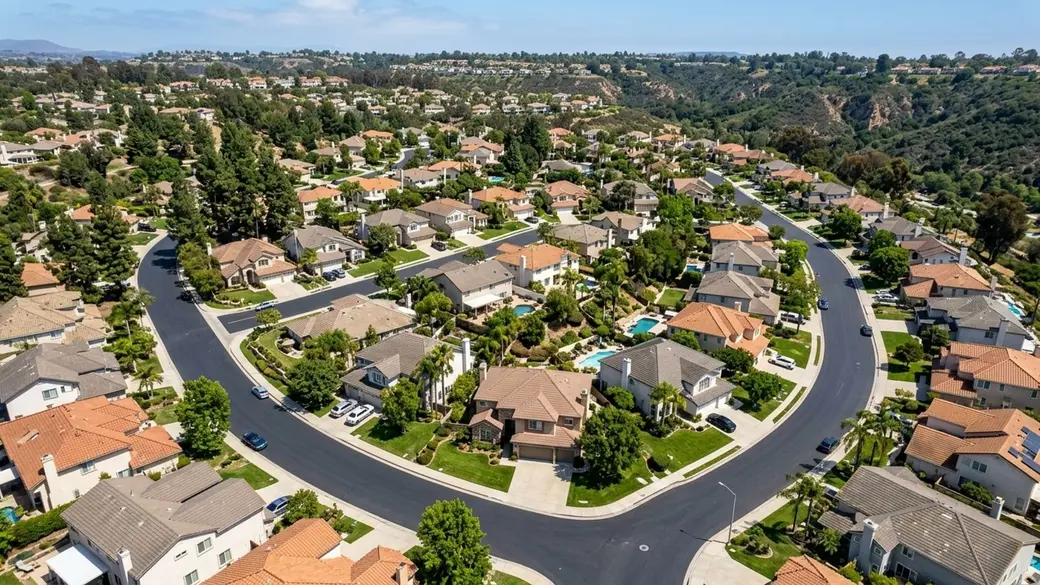
The median home sale price in Rancho Penasquitos, CA sits around $1,329,700 as of mid-2026. If you are a first-time home buyer in Rancho Penasquitos, CA, you will find that homes here move fast - roughly 17 days on the market before going under contract - and almost half sell above list price.
That sticker price is only the beginning of the conversation. Before you make an offer, you need a clear picture of your total monthly obligation: income, existing debt, and the local carrying costs that don't show up on a listing sheet. Get that baseline right, and you'll bid with confidence instead of crossed fingers.
Understanding Your Home Buying Power
Lenders use standard formulas to figure out how much they'll loan you. They look at your gross monthly income, stack it against your recurring debts, and land on a maximum mortgage payment. That number is the ceiling - not necessarily the number you should aim for.
Your personal comfort level might be well below what the bank will approve. Build a budget that still leaves room for savings and daily life, and treat the standard formulas as a starting point, not a finish line.
The 28/36 Rule Explained
The 28/36 rule is the guideline lenders use most often when sizing up a mortgage application. The "28" means your total housing payment - principal, interest, property taxes, and homeowners insurance - shouldn't exceed 28% of your gross monthly income. The "36" means all your monthly debt obligations combined, your new housing payment plus car loans, student loans, and minimum credit card payments, should stay under 36% of gross income.
Staying within both limits signals to the lender that you have enough cash flow left over to actually manage the mortgage.
Calculating Your Debt-to-Income Ratio
Your debt-to-income (DTI) ratio is simply your total monthly debt payments divided by your gross monthly income, expressed as a percentage. Lower is better - it generally translates to better loan terms and higher approval odds.
The 36% benchmark is standard, but some loan programs allow a DTI as high as 43% or even 50% under specific conditions. Pushing DTI to the maximum does qualify you for more house, but it also strips out a lot of monthly breathing room. And lenders will factor in everything on your credit report, so nothing gets hidden.
Factoring in Down Payments and Closing Costs
Your down payment size directly shapes your loan amount and your monthly payment. Putting down 20% eliminates private mortgage insurance and lowers your ongoing costs. That said, many buyers get into homes with 3% to 10% down depending on the loan type - 20% is not a hard requirement.
What people underestimate is closing costs. Plan for another 2% to 5% of the purchase price in upfront fees covering lender origination charges, appraisal fees, title insurance, and prepaid property taxes. Keep that money completely separate from your down payment funds when you're organizing your finances.
Local Costs That Impact San Diego County Housing Budgets
San Diego County has specific regional costs that generic affordability calculators simply don't capture. Tax rates and property-specific assessments vary from one subdivision to the next, and a home in one part of the 92129 ZIP code can carry a meaningfully different monthly cost than a similarly priced home two streets over.
Insurance is the other factor that's reshaping budgets right now. California homeowners insurance rates have risen 53.7% since 2020. That's not a rounding error - it changes how much you need to allocate for your escrow account, and running accurate local numbers before you apply prevents ugly surprises during underwriting.
Current Home Prices in Rancho Penasquitos
The median sale price here is roughly $1,329,700, though the range shifts considerably by property type. Detached single-family homes typically trade between $1.2 million and $1.6 million. Condos offer a lower entry point, closer to $892,500.
Inventory is tight - about 62 homes on the market with only 1.5 months of supply. The average sale-to-list ratio is 1.004, which means buyers should expect to pay at or slightly above asking price. Build that reality into your initial budget rather than assuming you'll negotiate something down.
Property Taxes, Mello-Roos, and Insurance Rates
The effective property tax rate in San Diego County generally lands between 1.1% and 1.25% of assessed value. On top of that, special tax assessments - Mello-Roos - can add to the bill, though many homes built in the 1960s, 70s, and 80s in Rancho Penasquitos have had their 30-year Mello-Roos fees expire.
Some newer developments, like Pacific Village, are specifically marketed with no Mello-Roos. Other North County homes might carry fees ranging from $50 to $300 a month. Verify the tax status of the specific parcel before you make an offer - not the neighborhood average, the actual parcel.
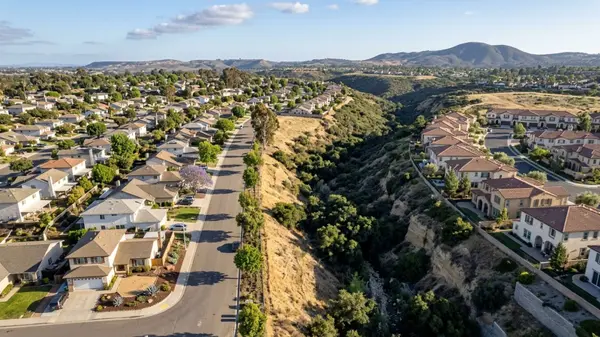
Homeowners insurance averages around $1,413 annually in California, with local quotes typically ranging from $1,300 to $1,900. If a property sits near a canyon edge or falls inside a designated wildfire zone, expect to land at the higher end of that range.
Additional Costs of Homeownership in California
Your mortgage payment is the big line item, but it's not the only one. Owning a home in a planned Southern California community adds operational costs that renters don't deal with directly - and they need their own place in your budget.
Skipping these secondary expenses when you're stress-testing your finances is how buyers end up stretched six months after closing. During escrow, pull the past utility bills and review the HOA documents so you're working with real numbers, not guesses.
HOA Fees and Routine Maintenance
Many neighborhoods in Rancho Penasquitos have a Homeowners Association. The dues cover common area maintenance, community pools, and shared landscaping, but they also become part of your mandatory monthly housing outlay - and lenders count them in your DTI calculation.
Beyond dues, plan for general upkeep. A standard starting point is setting aside 1% of the home's value annually for repairs and maintenance. Older properties may need more, particularly if a roof replacement or HVAC work is on the horizon.
Utility Costs and Local Rates
Utility costs through providers like SDG&E move with the seasons and the home's energy efficiency. Larger detached homes cost more to heat and cool than attached townhomes or condos - that's just physics.
One thing worth checking on any property: solar. Owned solar panels can significantly reduce monthly electricity costs. A leased system is a different story - assuming that lease adds another debt obligation to your monthly budget, and your lender will treat it that way.
Steps to Increase Your Purchasing Power
If current prices feel like a stretch, there are real levers you can pull before you apply. Improving your credit profile or tapping into local assistance programs can change your maximum approval amount more than most buyers expect.
The key is starting early. Preparing your finances months before you apply gives changes time to register on your credit report. A stronger application unlocks lower interest rates, and a lower rate directly increases how much loan you can carry for the same monthly payment.
Improving Your Credit Profile
Your credit score is what drives the interest rate a lender will offer you. Paying down credit card balances lowers your utilization ratio, which is one of the fastest ways to move your score. While you're shopping for a home, don't open new credit accounts or put large purchases on a card.
Pull your credit report and look for errors. Disputing inaccuracies can remove negative marks that are dragging your score down for no good reason. Even a modest score improvement can mean a meaningfully lower interest charge over the life of the loan.
First-Time Buyer Programs in California
The California Housing Finance Agency (CalHFA) runs several programs worth knowing. MyHome Assistance provides a deferred-payment loan covering up to 3.5% of the sales price for down payment and closing costs. CalHFA also offers the Zero Interest Program specifically for closing cost assistance.
Locally, the San Diego Housing Commission offers a Middle-Income Program for buyers earning between 80% and 150% of the Area Median Income - it includes a $40,000 deferred down-payment loan and a $10,000 closing cost grant. The County of San Diego runs a separate program for households at or below 80% AMI, offering a 3% interest deferred loan for up to 17% of the purchase price.
Frequently Asked Questions
What salary do I need to qualify for an average home in Rancho Penasquitos right now?
It depends on your down payment and current debts. With a median sale price of $1,329,700, buyers putting down 20% are financing over $1 million. You'll need to calculate your specific debt-to-income ratio to determine the exact gross income your lender requires.
How much do Mello-Roos and HOA fees in Rancho Penasquitos impact my monthly housing budget?
It depends on the specific property. Many older homes built in the 1960s, 70s, and 80s have no Mello-Roos because the 30-year assessments have expired. If a North County home does carry an active Mello-Roos assessment, it typically runs $50 to $300 a month on top of any standard HOA dues.
Do I need a full 20% down payment to be competitive when buying a house in Rancho Penasquitos?
No, 20% down isn't required. Many buyers use conventional loans with 3% to 10% down, or programs like CalHFA's MyHome Assistance. That said, homes in the 92129 ZIP code average 17 days on the market, and a stronger down payment can make your offer more appealing to sellers.
How much of a pricing premium am I paying to be in the Poway Unified School District when buying in Rancho Penasquitos?
Pricing premiums for specific school districts vary widely across the region. Check the district's boundary map and compare recent sale prices for homes zoned to specific schools against those outside the boundary.
If I'm priced out of Rancho Penasquitos, what are the most comparable affordable neighborhoods nearby?
It depends on your specific budget and housing needs. Since the median price here is roughly $1,329,700, buyers looking for lower price points should review active listings in surrounding San Diego County communities to find comparable features.
What happens to my out-of-pocket costs if a Rancho Penasquitos home appraises for less than my offer?
If the home appraises below your offer price, your lender will only finance up to the appraised value. At that point you have three options: renegotiate the price with the seller, cancel the transaction, or cover the gap in cash - which increases your total out-of-pocket closing costs.
Categories
Recent Posts

GET MORE INFORMATION